
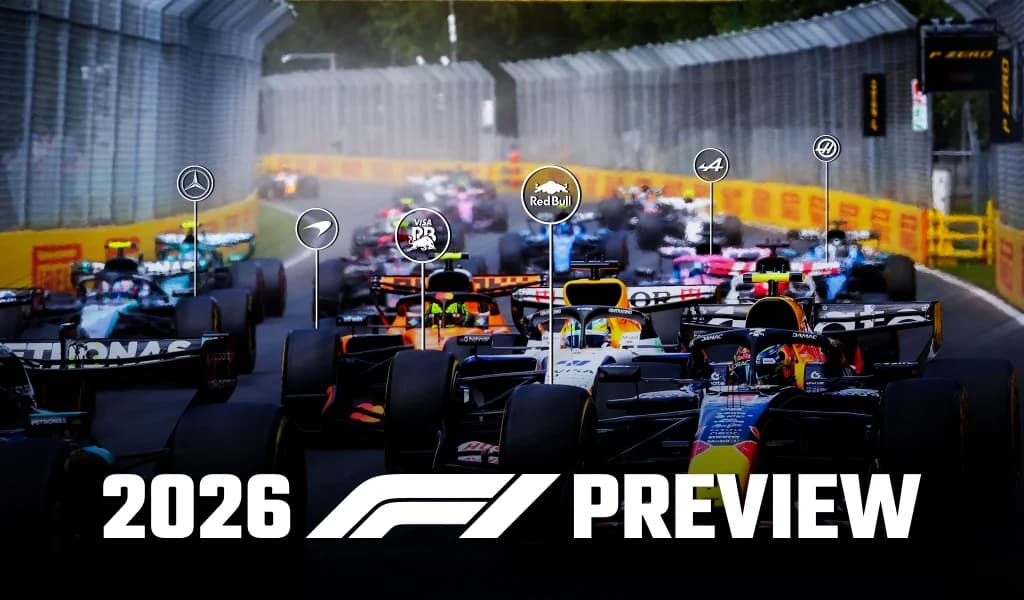
After Lando Norris’s razor-edge championship win in December of last year for McLaren, Formula 1 racing is back in season. This year will see a big reset as new technical regulations put drivers behind the wheels of cars that demand far more energy management, and many are unhappy about it.
The Fédération Internationale de l’Automobile (FIA), F1’s governing body, has laid the ground-effect era to rest in an effort to reduce dirty air. The new cars feature flatter bottoms, instead of the Venturi tunnels that were used in prior seasons to stick cars to the track at high speed. Fans can expect to see a huge reduction in “porpoising” (high-speed bouncing caused by ground-effect aerodynamics), which was a major issue in recent F1 seasons.
These changes, along with some driver and team shakeups and other technical revisions across the car design, mean that the rankings are a bit more open than they’ve been in recent years. 2026 promises to bring exciting new challenges and rivalries to the F1 circuit grid.
Season Opener – Mercedes Takes the Checkered Flag at the Australian Grand Prix
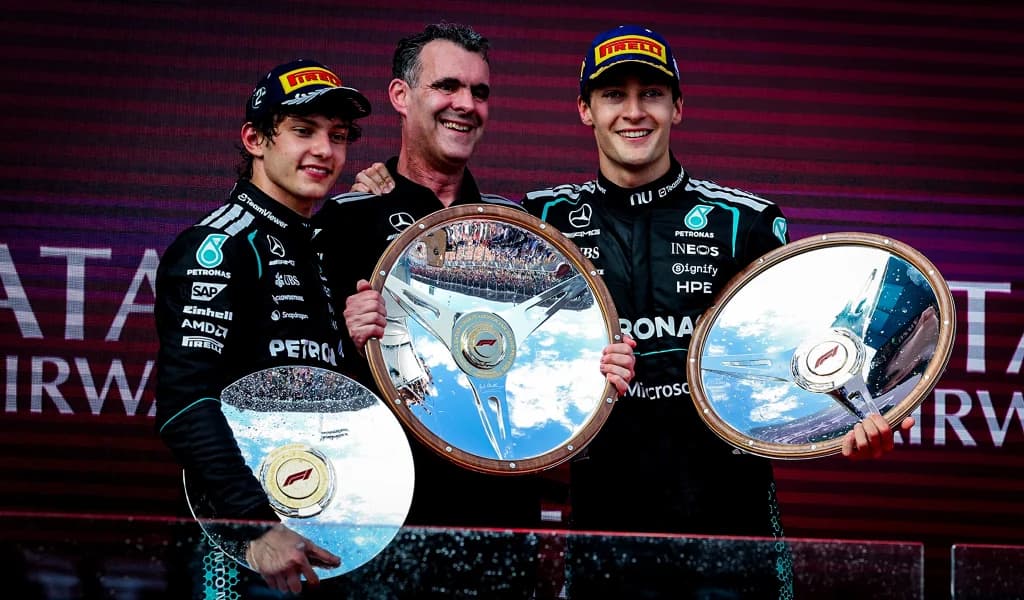
The 2026 Australian Grand Prix marked a victorious start for Mercedes, as George Russell turned pole position into a dominant victory. His teammate Kimi Antonelli finished close behind in P2. Charles Leclerc did challenge for the lead early in the race, but Ferrari made a critical mistake by not pitting for fresh tires during a Virtual Safety Car period, while rival teams took advantage of the window to gain track position, ultimately compromising Leclerc’s chances at victory. This gave Mercedes a decisive advantage, and Leclerc finished third. His teammate Lewis Hamilton is already in better shape than last year, finishing P4 and narrowly missing out on his first podium since 2024. Lando Norris finished P5 for McLaren, holding off a late charge from Max Verstappen, who delivered the drive of the day by slicing through the field from P20 to P6 after crashing in Q1 and starting at the back.
Arvid Lindblad did well in his first race by scoring some points for Racing Bulls (he’s the third youngest points-finishers in history). Audi secured a respectable 9th place, thanks to the skillful driving of Gabriel Bortoleto. Among the newer teams on the grid, Cadillac suffered a setback as veteran driver Valtteri Bottas was forced to retire due to a cooling issue. Home favorite Oscar Piastri crashed on the reconnaissance lap, ruling him out before the race even began.
Revelations from the First Race
- The field is much closer than people thought going into the season. Red Bull is still strong, but the 2026 season has seen a major shake-up, with Mercedes and Ferrari outperforming both McLaren and Red Bull, making the field more unpredictable than expected.
- Ferrari showed strong pace during the middle phase of the Melbourne race. As tire temperatures stabilized, the car’s performance improved significantly.
- McLaren continued their strong form from last year, with drivers managing tires well and staying competitive. While Red Bull hasn’t looked dominant at the start of the season, it’s Mercedes, Ferrari, and McLaren leading the pack as the action kicks off.
Some teams are also having minor power unit issues. This was bound to be the case with the complexity of the hybrid systems that are new for 2026. The result is a reminder that the first year under new regulations will favor teams that can balance performance with durability.
Changes to Technical Regulations
In 2026, F1 racing offers a significant overhaul of technical regulations. Cars are smaller, lighter, and more efficient. Many engineering changes have been aimed at reducing overall drag while maintaining the downforce levels needed for close racing. But one change overshadows the entire season.
50/50 Split between Electric and Combustion
One of the biggest changes for 2026 F1 racing is that the hybrid 1.6-liter V6 engine now splits power output 50/50 between electric and combustion. For the internal combustion engine, power output has dropped from 560kW (750hp) down to roughly 400kW (535hp). For the electric motor (MGU-K), engineers have increased output from 120kW (160hp) to a massive 350kW (470hp). Energy recovery systems are also a lot more powerful. This introduces a new strategic element around how electrical energy is deployed during a lap.
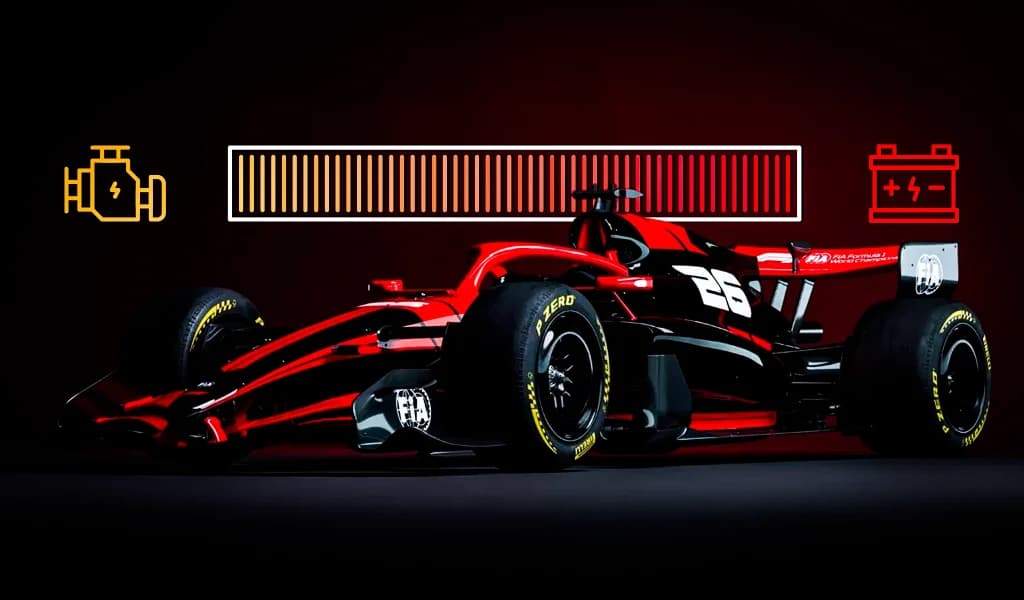
More specifically, the small, light battery does not have enough power for a driver to rely on it for an entire straightaway. If the driver “clips” (empties the battery), they will slow down suddenly at a very inopportune time. Thus, drivers will have to store energy during braking or while at partial throttle to ensure that there is enough electric power for the next straight.
The new F1 units are also built to run on fully sustainable fuel, a nod to environmental concerns. Teams were forced to redesign both power units and chassis. Major regulation resets often produce unexpected results across the grid, as teams adapt to entirely new designs.
New Overtake Mode
In 2026, drivers will be using manual override mode (“overtake mode”) for passing. Instead of opening a wing flap, as they did when using the old drag reduction system, drivers will rely on an electrical power advantage. Normally, electrical power begins tapering off at very high speeds, but overtake mode allows drivers to deploy more of the available electrical boost during passing attempts.
Overtaking Rule Change
This also comes along with a change to the previous rule. The rule for the old drag reduction system was that drivers could only use it when within one second of the car ahead. Overtake mode can still only be activated if less than one second behind another driver at the detection point (just before a straight). However, it can be used anywhere on the lap once activated. This means that drivers can deploy it multiple times to pressure other drivers or use it in a sustained burst of speed. Drivers also have access to “boost mode.” This is used at any time to defend passes or set fast laps. Both of these options will add new strategic wrinkles to how laps play out.
Active Aero Expands
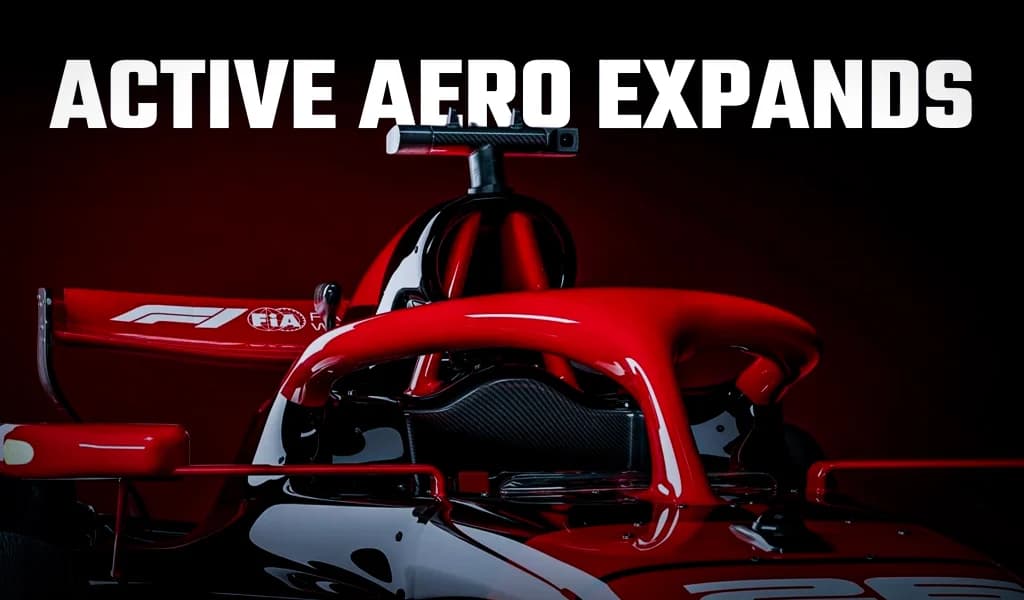
In 2026, active aerodynamics has shifted from a simple passing tool to a mandatory, full-lap efficiency system. There are two distinct driver-controlled states. The default “Z-Mode” provides high downforce for cornering. “X-Mode” is a low drag mode that flattens flaps on both the front and rear wings to reduce drag significantly on straights.
Criticisms of New Technical Regulations
Lando Norris: “Worst cars ever”
Not everyone is a fan of the new technical requirements. Lando Norris has gone on record saying that the new rules increase the risk of accidents. How? The differential between 1) a car in overtake mode and 2) a car that is “harvesting” energy can be between 30 and 50km/h. He views this as chaotic and likely to result in a car flying over the fence.
Another issue is the dramatic deceleration that happens when the battery clips. Even at full throttle, the car slows down far too much for his tastes. And he finds himself severely distracted by looking at the steering wheel every three seconds to manage power. The downside of this added complexity is that he can’t push the car to the limit, which takes the joy out of driving.
Max Verstappen: This is “anti-racing”
Verstappen is also critical of the slowdowns (Many drivers remain skeptical of systems that artificially limit performance). He finds that the battery is draining so fast, he has to downshift on straights just to keep RPMs up. He also says the cars are too heavy, and that future changes should focus on lighter cars, not active aero complications. He prefers last year’s cars, even with the annoyances that came with ground effect designs, saying they were “ten times better than this.”
Lewis Hamilton: “A step in the right direction”
Hamilton is happy with sustainable initiatives, but says the cars are “weird to drive” and has referred to battery management as “clunky.” He has called the weight reduction a “step in the right direction.”
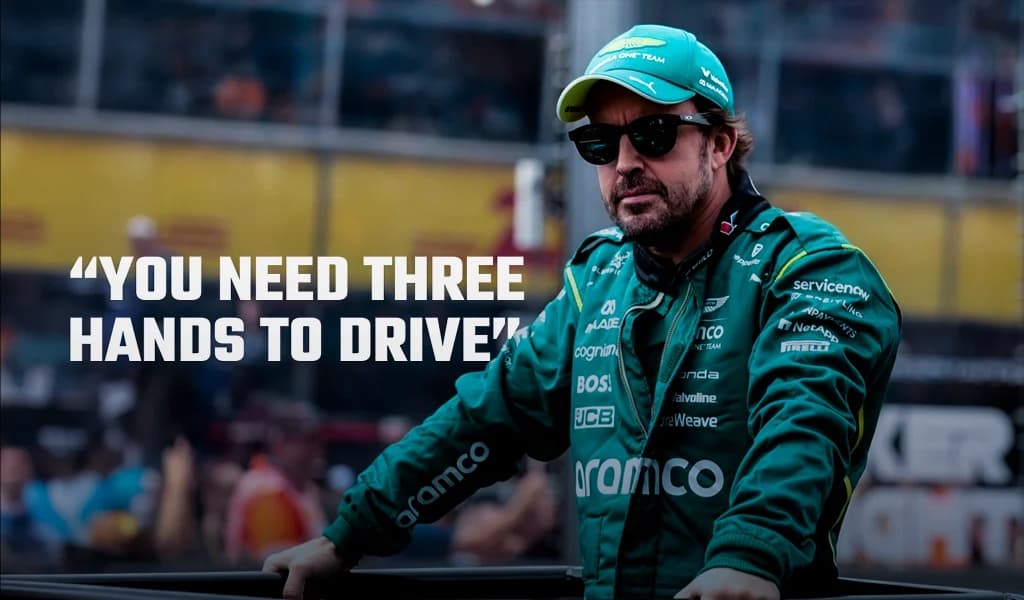
Fernando Alonso: You need “three hands” to drive
Alonso is a seasoned vet, and now laments that drivers need “three hands” to manage the battery, active wings, and steering. He has also mentioned that if the active aero fails (e.g., a wing doesn’t go back into corner mode before a turn), it could cause bad crashes.
Fresh Faces and Shifting Alliances
There are fresh faces on the F1 grid for 2026, including manufacturers and drivers.
The new partnership between Ford Motor Company and Red Bull Racing is big. Ford has been away for decades since a run of disappointing seasons in the early 2000s as “Jaguar Racing.” The return adds another major manufacturer to the F1 grid. Red Bull’s engineering prowess, combined with Ford’s resources, might make for a great power unit.
Four-time World Champion driver Max Verstappen will be returning for another season. Joining him in the second car is 21-year-old French driver Isack Hadjar, while Yuki Tsunoda moves to reserve. Red Bull is looking to improve results by promoting a younger talent.
Racing Bulls have taken a similar approach, with 18-year-old British driver Arvid Lindblad set to race for the RB squad this year as F1’s only true rookie.
New this year is Cadillac, which rounds out the 11-team grid. This will be the first time in a decade that 22 cars have lined up for a Grand Prix. Cadillac pulled in veterans Sergio Pérez and Valtteri Bottas to race for the team.
Audi officially enters Formula 1 as a full works manufacturer for 2026. The team has taken over the former Sauber operation. Audi has been in the lab for years preparing its engine program, hoping to hit the ground running in its first competitive season. Their first driver is thirty-eight-year-old veteran Nico Hülkenberg, who famously secured his first-ever podium at last year’s British Grand Prix. He will be paired with the highly-rated sophomore Gabriel Bortoleto, a 21-year-old Brazilian who won the 2023 FIA Formula 3 Championship.
Lewis Hamilton, the most successful F1 driver of all time, will work to rebound from a disappointing 2025 season with Ferrari. It was his first season with a new manufacturer after driving for Mercedes for over a decade, and he finished sixth in the World Drivers’ Championship. The move caused a lot of soul searching. He will race alongside teammate Charles Leclerc, who finished fifth last year and had a number of complaints about his vehicle.
Honda is also back to a full works role in a partnership with the Aston Martin F1 Team.
Next Up: Formula 1 Heineken Chinese Grand Prix in Shanghai
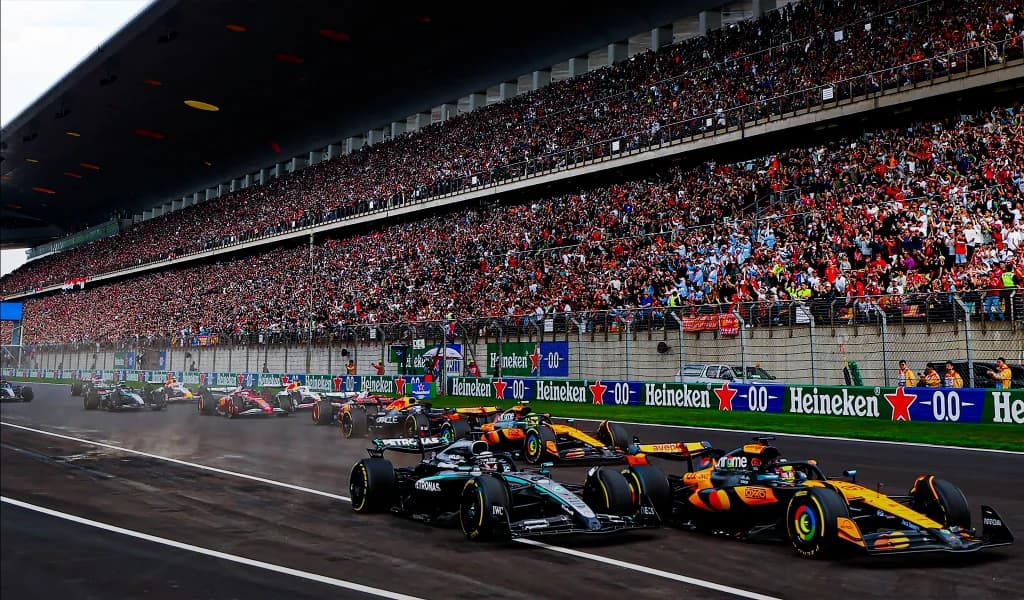
Mercedes has the momentum going into the next event in China after their opening 1-2 finish. Many eyes will be on Lewis Hamilton, who returns to the track where he was able to hang with the pack in 2025. The question is whether he can repeat that performance this year.
The challenge for many will be managing front-left tire wear in the iconic “snail” Turn 1, while maximizing battery deployment on the massive back straight (a stretch of 1.2 km). This is going to be hard for teams to prepare for, given the one-hour practice window offered by the Sprint format.
The race presents a prime opportunity for the midfield to pick up points. Audi and Cadillac will be looking to gain ground on established teams that make errors. Max Verstappen will likely push for a stronger result after his early exit in Q1. The 2026 active aerodynamics will be tested in their first major trial on a circuit that really requires optimal balance between high-downforce cornering and low-drag straight-line speed. The rankings could look quite a bit different when it’s all said and done in Shanghai.
How Will The Season Play Out?
- Red Bull is still capable—Verstappen can get the job done, though his interest seems to be waning under the new technical regulations. Meanwhile, Hadjar looks poised to break the “second-seat curse,” showing impressive pace in a car built for Max.
- Ferrari will want to focus on consistency. If they can perform like they did in Melbourne on multiple tracks over the season, they’ll be right in the mix.
- Mercedes leaves Australia with a very promising start. Can they stay there?
- McLaren is making it a possible four-team battle at the front. Fans will no doubt be delighted to see even more intense competition as these teams and others battle for glory over the 2026 F1 season.