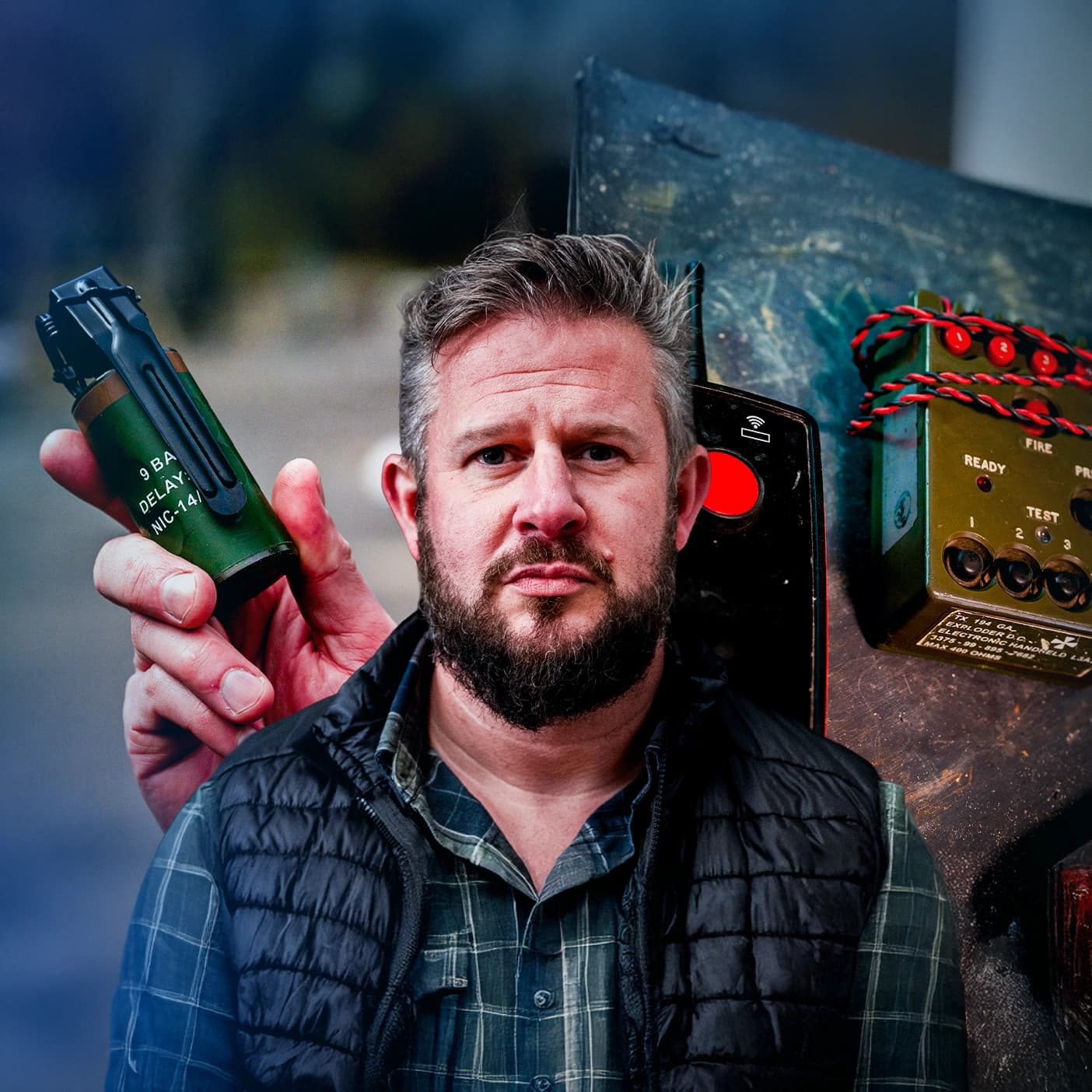
When Selema Masekela stepped into the blast radius with British bomb disposal expert Kim Hughes, the reality of the job became immediately clear, as every movement brought him closer to a threat that could detonate at any moment and erase everything in seconds. Walking beside Kim exposed the constant tension and life-or-death precision required in bomb disposal, revealing just how much mental control and calculated focus it took to move toward danger while knowing one wrong step could end it all.
The Long Walk
“It looks dug up. That patch of ground right there.”
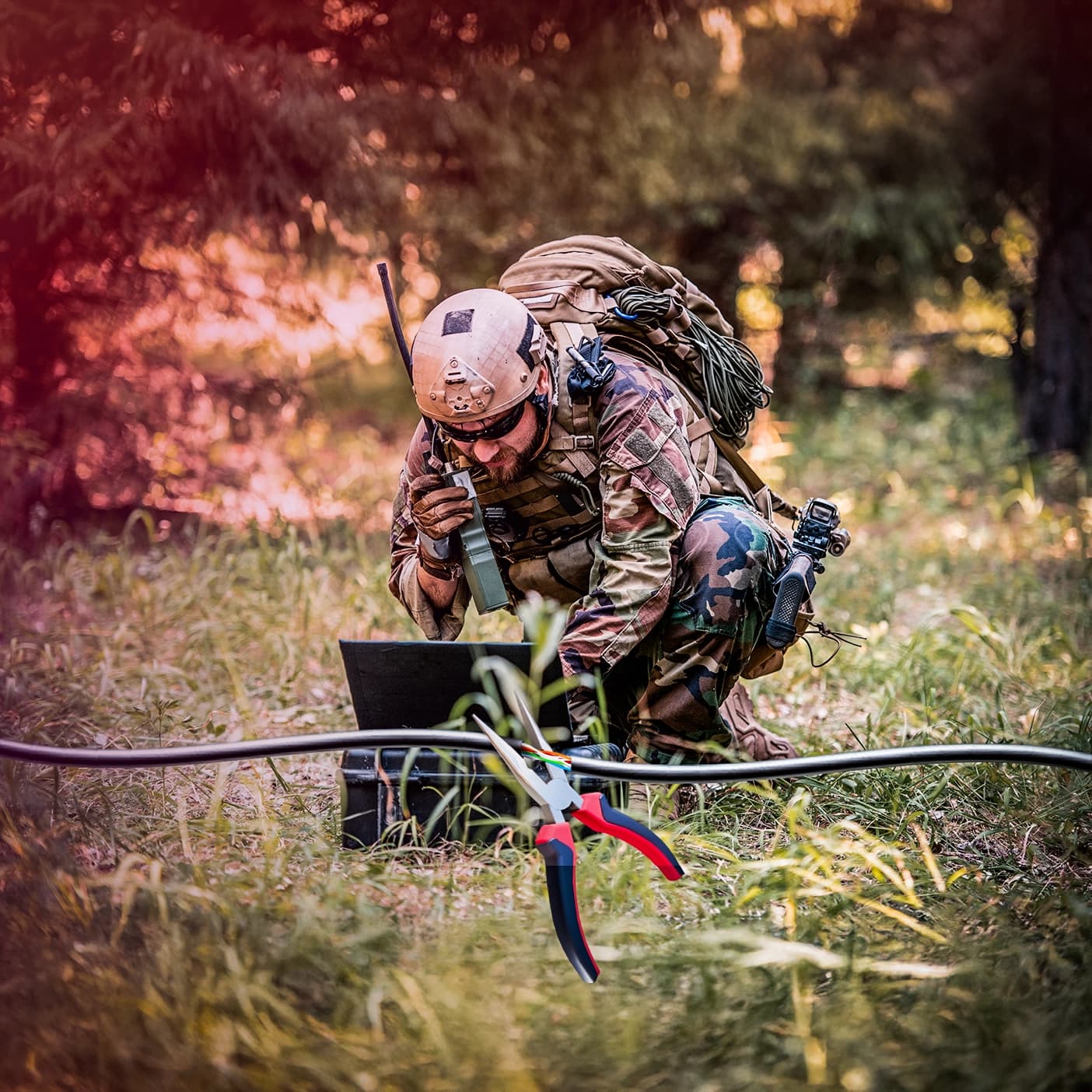
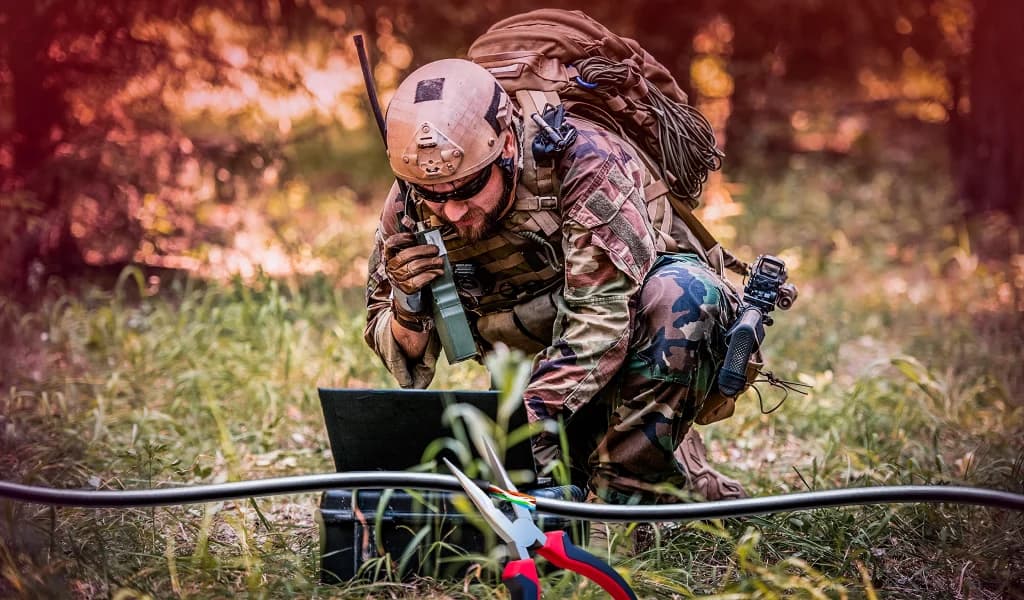
Sometimes, that’s all an explosive ordnance disposal (EOD) technician has to go on. A forward patrol of soldiers notices something suspicious about some earth, and they call in the only professionals who can really solve the problem. The task then is for the EOD team to figure out what’s there, render it safe, and give the patrol the go-ahead to move on.
It isn’t easy, and the EOD team only sends one person to work on the device. It’s part of a very basic protocol called the Cardinal Principle of Explosives Safety: expose the minimum number of people to the minimum quantity of explosives for the minimum period of time.
And so one person heads over to the device. While everyone waits on pins and needles, a single person walks out alone. They call this “the long walk.” The technician walking forward often looks almost like an astronaut on Earth. They’re heavily armored in a bomb suit made of nearly head-to-toe Kevlar with blast plates around vital areas. It might not be enough if there’s a lot of explosives present and things go wrong, but it’s a lot better than nothing.
They have the team in their ear over the radio if he needs, but he’s likely locked in and focused on implementing his training faithfully. The right process and procedures will save his life and the lives of others, so it pays to stick to that as carefully as possible.
Making Nothing Happen
Explosive ordnance disposal is a strange job in that it is defined by what doesn’t happen, instead of what does. If a professional does their job the right way, there is no bomb, no blast, and no headlines. The world moves on. But a major tragedy has been prevented.
The patrol continues forward, civilians can get back to their lives, and whatever disaster was planned is canceled.
Training to Serve
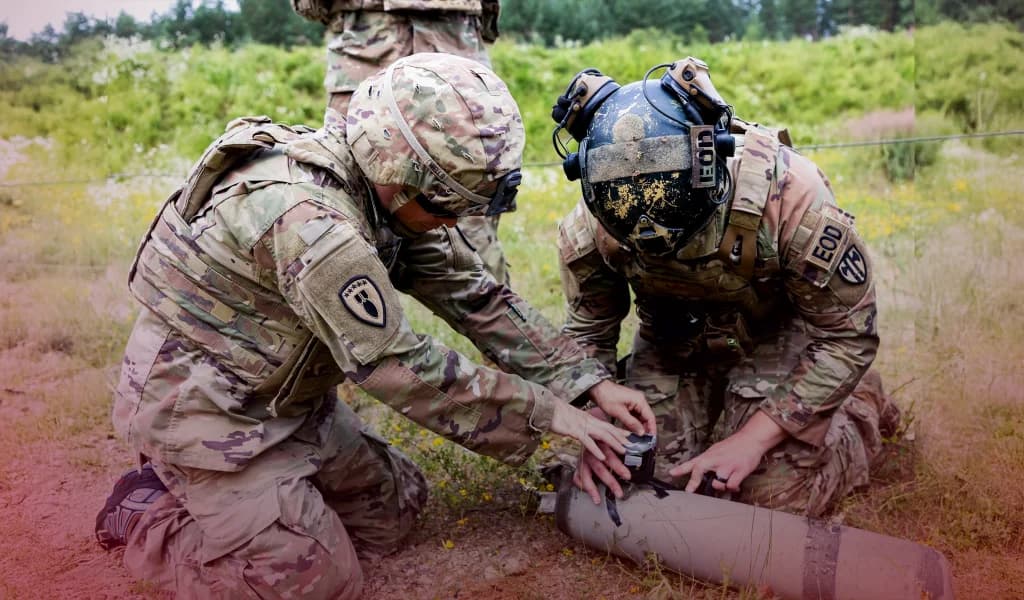
It takes a long time to train to do EOD work. Teams are made up largely of people who stepped forward and showed a passion for the job. Even from these, there is high attrition. Many who start down the path will find that the realities of EOD jobs are too challenging. There are a few who actually want tense, life-and-death decisions to be part of their daily life. It’s also a tough specialty to get into, requiring high intelligence, technical aptitude, and even psychological stability (due to the intense mental pressure of the job).
Explosives experts start in the classroom, where they learn about chemistry, electronics, and the types of fuse systems that are used in munitions and improvised explosive devices. Trainees essentially have to build a mental catalog of the many kinds of ordnance they will encounter. For many military professionals, this will require knowledge of what is common in a lot of different conflict environments around the world. What a Middle-Eastern terrorist group might use can differ quite a bit from the technology favored by a dissident group in Asia, or even a group homegrown in the soldier’s land of origin.
Repetition is key. Every procedure, from identification to defusal to safe removal, has to be practiced again and again, until doing things the right way becomes automatic. This is a job where, in the field, there might be zero room for error. A mistake could be instantly fatal not just to the EOD team, but to others as well. It could take out critical infrastructure or expensive equipment. There’s just no tolerance for mistakes. Thus, EOD techs learn to be precise, consistent, and committed to established procedures unless there is an excellent reason to do so.
Tools of the Trade
A modern EOD professional will likely handle all kinds of different threats and devices. This means conventional munitions that are found on battlefields (artillery shells, mortar rounds, and even undetonated aerial bombs). They may also have to handle IEDs of many different types, which have been defined in conflicts in Iraq, Afghanistan and are still used in modern terror attacks. There’s a growing need in modern conflict to deal with drone-based explosives as well. Some techs will even need to be ready to handle chemical or radiological hazards, which present unique dangers.
Technology and specialized tools play a central role in modern EOD operations. Remote-controlled robots are often used to probe a suspicious situation safely. These feature cameras and advanced manipulators (i.e., a robot “hand”) give techs the ability to inspect from a distance. Disruption tools like water cannons or even small explosive charges can also be used to disable a device without fully triggering it.
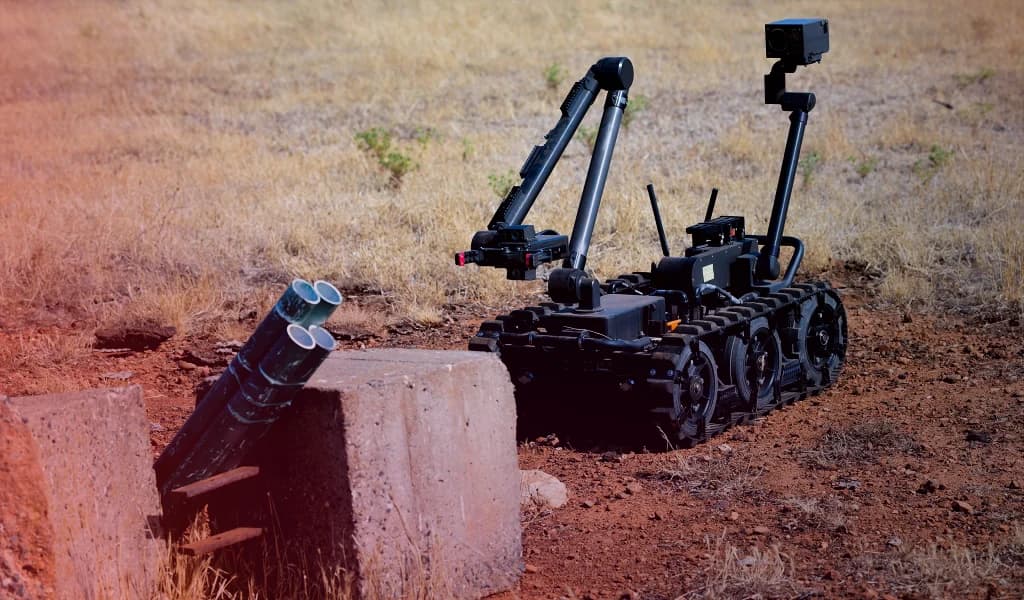
Electronic countermeasures can be used to block or interfere with signals used for remote detonation. Think of a “jammer” that keeps the enemy from triggering an explosive by use of a phone-based signal. There are also detectors and sensors that are used to find hidden threats.
Not every device can be handled remotely, unfortunately. Terrain, design, or the need for precise intervention might mean that a technician will have to approach manually. Bomb suits also provide protection, but they are heavy and restrictive. It’s quite hard to move and work in them.
All of these tools can reduce risk, but never eliminate it. EOD work always carries serious risks.
The Evolution of the Threat – The Rise of IEDs
As famed British EOD tech and George Cross recipient Kim Hughes said, “There is no manual for IEDs.” They are each made by a different person with different materials and methods. They have to be handled individually. Some are made by amateurs, while others are quite sophisticated in design and manufacture. During the conflicts in Iraq and Afghanistan, IEDs became one of the most serious threats, precisely because they were always changing just as fast as countermeasures.
Triggering mechanisms vary a lot. Many people are familiar with pressure plates that are buried beneath the ground. One wrong step and the device goes off. But there are also command wires that stretch across terrain and radio-controlled detonators that use common consumer electronics. There are even anti-handling features that target people attempting to disarm the device. Secondary devices may also be deployed to detonate after an initial explosion. These are aimed at taking out responders, and so people can never really let their guard down when responding to suspected explosives.
Life and Death Decisions
EOD operations boil down to one core task: making the device safe. Disruption, removal, or controlled onsite detonation are all options to consider, and the right choice depends on the type of device involved, the surrounding area, and even the broader mission context.
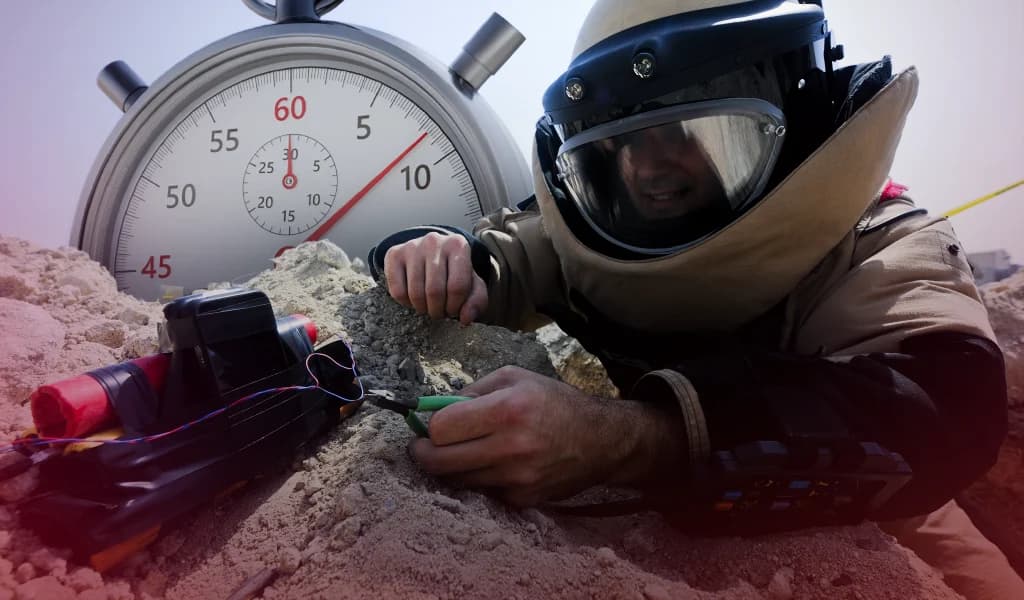
Time matters a lot. Sometimes, there is little appetite to delay for ages while EOD techs work. It may be necessary to find a quicker solution, so troops are not sitting ducks. In other cases, it could be right to spend significant time studying the situation before making a move.
Sadly, there just is no risk-free option. Everything EOD teams do involves trade-offs, with a very small margin for error. So high-stakes decisions just come with the territory. The good news is that sound training and keen focus can carry an EOD operator safely through a whole career of high-risk situations.
Pressure and Mindset
For the reasons described above, EOD work is technically demanding, but also psychologically demanding. It can sometimes be hard to shake the knowledge that an error could be deadly – and instantly so. An untrained person would likely freeze and panic in such a situation. This means that discipline and reliance on training are the keys to accomplishing the mission and getting out alive.
Fear may be present, but it must be managed. It is acknowledged, but cannot be allowed to get in the way of mental focus. EOD techs zero in on the details of the task at hand. They don’t get overconfident, either. That’s not the solution. Instead, they fall back on the procedures they have repeated time and time again, no matter how annoyingly routine or pointless it may seem. Sticking to the plan is a lifesaver.
That said, the toll of stress over time is real. EOD teams that go through long deployments and who have gone through countless dangerous situations carry a heavy mental burden. This is especially true if they have lost friends and teammates along the way. Fatigue and burnout are something that must be monitored. Support, where available, can help. But to stay sharp and stay in the fight is a very tall order that requires not just passion for saving lives, but the ability to face danger repeatedly without coming unraveled.
EOD folks are only human in the end, although it seems clear that they are, without a doubt, built differently. We can all be grateful for these resilient professionals who are able to make “nothing” happen, time and time again.