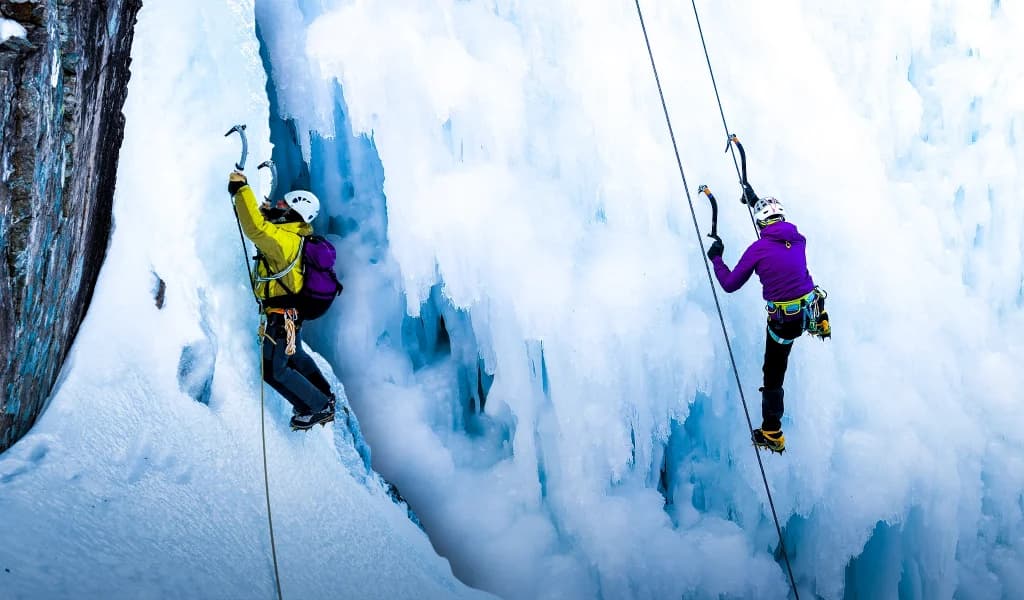
With crampons strapped on and axes in hand, Selema Masekela stepped onto a towering wall of ice alongside renowned climber Fay Manners. A single encounter pushed Selema to his limits, both physically and mentally – making it all the more impressive that Fay has chosen to dedicate her life to scaling these vertical ice walls. Afterward, she shared what it means to pursue such a relentless and unforgiving environment as a career, and why the mountains keep calling her back.
History of Ice Climbing and Mixed Climbing
Ice climbing involves ascending frozen surfaces—often waterfalls or ice-covered rock—using specialized equipment like ice axes (often called “tools” by climbers) and crampons attached to mountaineering boots. The sport has reached wider audiences through films such as Touching the Void and Vertical Limit, which depict the high-stakes reality of climbing on a surface that can shift, fracture, or collapse without warning.
To some extent, ice climbing is an ancient art. Human beings have navigated challenging frozen terrain, even in the mountains, for thousands of years. But climbing vertical ice walls is a relatively modern pursuit. There was little need for it until people with a sporting mindset chose to take on sheer walls of ice head-on with specialized equipment and gear.
The Beginning of Ice Climbing and “Step Cutting”
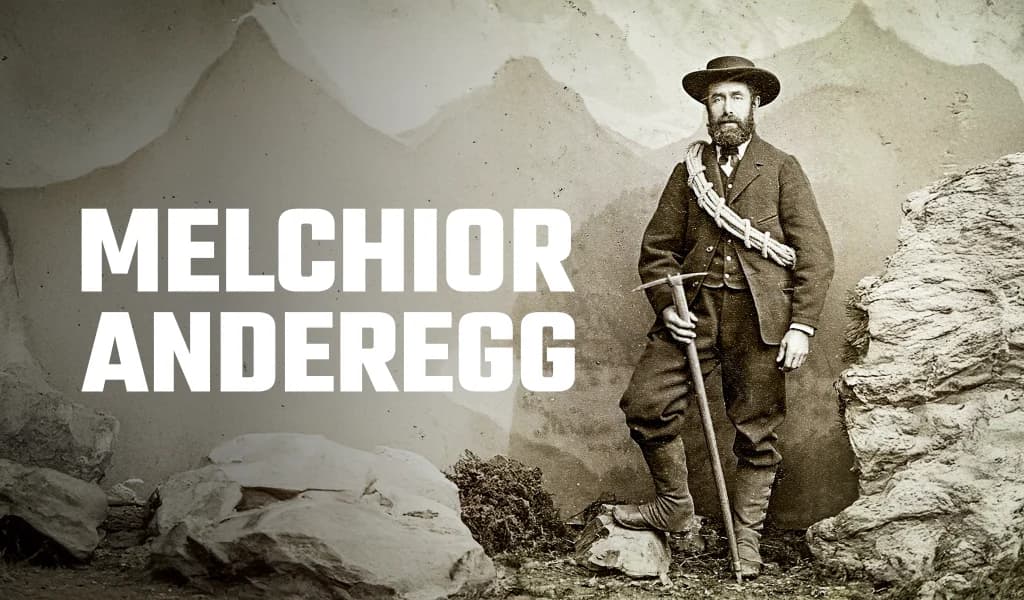
The roots of ice climbing are found in the early days of alpine mountaineering. This puts the start of the story in the late 1800s or early 1900s. These years were in or following the “golden era” of alpinism, where climbers like Edward Whymper (the first to climb the Matterhorn in 1865) and Melchior Anderegg (the first up the Eiger) became legends. Back then, ice climbing wasn’t really viewed as a separate activity. It was a part of the obstacles and challenges faced by those in search of frosty summits.
The main technique of the day was called “step-cutting,” where climbers used axes to chop rudimentary steps into the ice. These steps resembled a shallow pocket into which a foot could be placed. It was slow and incredibly difficult to ascend in this way, but this is where pioneers laid the groundwork.
In 1908, Oscar Eckenstein invented the 10-point crampon. And in 1929, Laurent Grivel added two horizontal front points. This gave climbers the basic design of the vital traction device that would enable them to kick their feet directly into the ice and create a foothold wherever needed. Manageable ice tools also made it possible to perform highly technical ascents on new terrain. Routes that were once thought impossible finally opened up.
By the 1970s, climbers started looking at frozen waterfalls as objectives in and of themselves. Places like the Canadian Rockies, Colorado, and Scotland each offered intriguing challenges where people could test out their skills and develop the fresh discipline of ice climbing. Ice tools also continued to evolve. In the 1990s, specialized gear and new techniques made it possible to take on very steep and technical mixed routes, even if there were overhanging rock sections that required precision tools.
Over time, ice and mixed climbing (climbing over both rocky and icy terrain) evolved from basic mountaineering skills into their own distinct disciplines.
The Spectrum of Modern Ice and Mixed Climbing Environments
Traditional alpine ice routes
Old school mountain climbing involved ascending long mountain faces and glaciers to reach high summits. This required hours or days of travel through remote terrain. Success depended on efficient movement, route-finding, and managing conditions as they changed. Most of the famous mountain climbers from days gone by were focused on traditional alpinism. There was little scaling of vertical ice faces, however.
Waterfall ice climbing
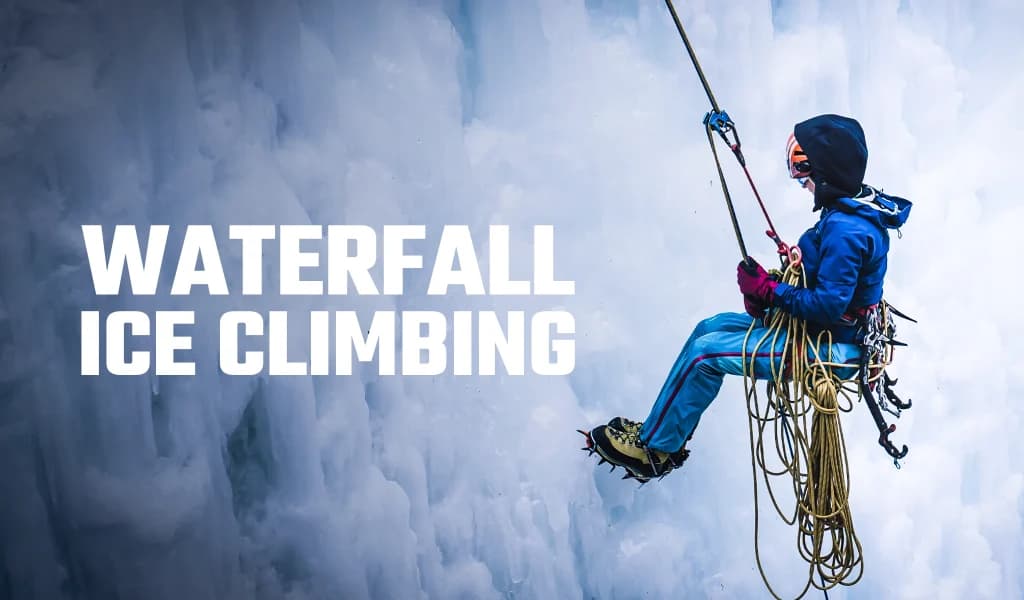
This is the branch of pure ice climbing that eventually took shape. Ice climbing on waterfalls is largely a seasonal pursuit, only possible when freezing temperatures turn wet surfaces solid. Ice axes and crampons are required. Routes can be shorter, but are highly technically demanding. New routes not available to traditional alpinists become possible to those willing to scale surfaces that are pure ice. This has enabled adventurers to break new ground and continue the progression of mountaineering.
Mixed climbing
Mixed climbing combines traditional alpine climbing over rocky surfaces with ice climbing. It’s quite complex, and climbers have to be ready for all types of challenges, including ice flows interrupted by rock bands, frozen turf, or thin ice over stone. To successfully conquer a mixed route, climbers hook rock edges with tools, torque picks into cracks, and front-point on small edges with crampons. It blends all kinds of skills into a single challenge.
Technical ski mountaineering
Going down the mountain on skis after a challenging ascent may seem like the “fun part,” but is incredibly challenging in its own right. Skiers have to pick a very precise line to avoid deadly sections of the mountain that are not negotiable on skis. Done well, it leads to breathtaking feats, like Polish mountaineer Andrzej Bargiel’s ascent of Everest without supplemental oxygen and ski descent via the South Col.
Training for Ice Climbing
Ice climbers, like all serious climbers, need to be fit and skilled. This means strength and cardio endurance are crucial. Climbers also need to be capable of handling and using their tools well, which requires practice. In addition, they need to manage their mindset while working in challenging conditions: calmness is key.
Climbers perform cardio training by hiking, running, and skiing. Upper body strength work also matters a lot, as does grip endurance. Alpinists have to be careful not to overexert themselves, working smarter, not harder. They must use each muscle as little as possible to avoid fatigue. Many climbs are more like a marathon than a sprint, requiring conservation of energy. Any muscle group that is blown out too early on could lead to a very miserable climb or even a disastrous accident.
Dry-tooling – the use of ice climbing tools to ascend bare rock – is a great way to train supplemental skills. Some gyms even allow athletes to practice moving with ice tools on artificial holds and rock features. It’s a safe, controlled setting to ingrain the movement patterns that will later be used on challenging mixed terrain.
Technical preparation involves a number of other mountaineering skills as well. Efficient rope management, anchor building, and how to communicate with your climbing partners are all vital for building a successful attempt at an objective or summit. The longer and more complex the route, the more each skill matters. Performing deep route research, including studying guidebooks, route descriptions, and weather patterns, is also an important practice for professional ice climbers.
How Do Ice Climbers Handle Risk?
The most obvious risk in ice climbing is falling. All of the preparation described above helps to reduce the risk of a catastrophic fall, but there’s so much more than that when it comes to risk management on the mountain.
The environment must be understood, first and foremost. A solidly frozen stretch of ice will fall apart as the spring thaws hit. This means that, as a preliminary matter, ice climbers can only attempt an objective for a brief seasonal window. Even then, knowing temperature, precipitation, and other factors affecting ice integrity are all critical pieces of information when planning a climb. A route can go from safe to dangerous in a single, unusually warm afternoon with lots of sunshine, so risk management really starts with the weather report.
Avalanches are another major hazard. Snow stability is essential for both the climbing ascent and skiing descent. A couloir (a steep gorge or “corridor” in a mountainous area) can quickly become deadly if avalanche risk is ignored.
Falling ice is another concern. Entire sections of a frozen waterfall can break off and tumble to the ground when the weather turns, so ice climbers need to know how cold the weather has been, and for how many days, before attempting a climb. Much like ice fishermen, ice climbers need a solid frozen surface to work on.
Putting all of these things together, ice climbers have to select their routes carefully, know what kind of conditions to expect, and even pick the right time of day to begin their ascent. A team will plan retreat options for each phase of a complex climb so that they will know what to do if the mountain does not cooperate. Ambition is what sends climbers up the mountain, but caution is what makes sure they get back down again.
Key Climbing Gear for Ice
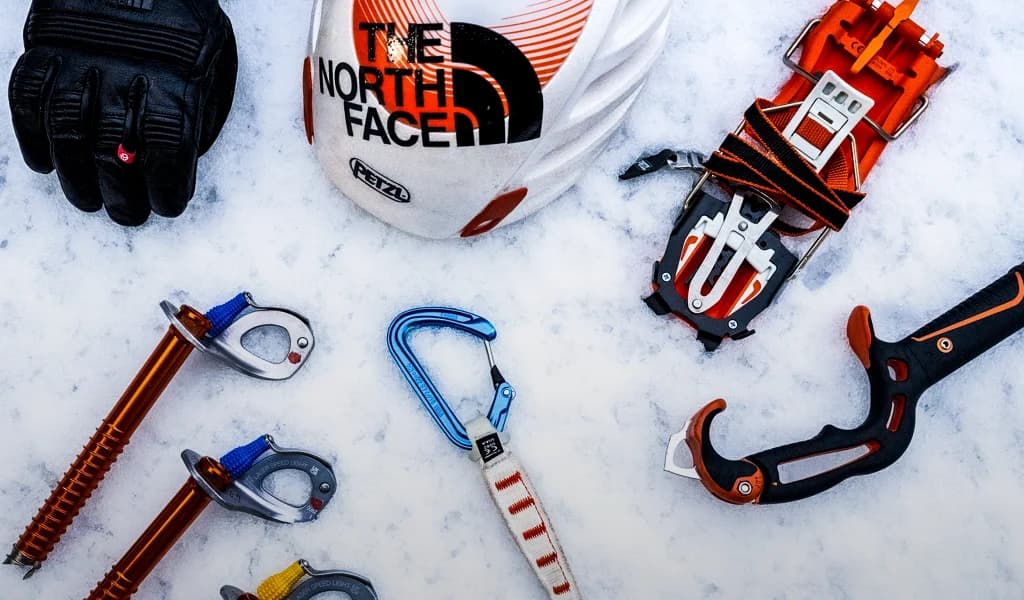
- Ice axes. Traditionally, this was the essential piece of gear for the alpinist looking to tackle frozen areas. But long wooden handles were abandoned long ago in favor of superior alloys and other materials. Modern ice tools have ergonomic handles and curved shafts that let climbers keep a comfortable wrist position when swinging and hooking their picks. A modern pick will bite deeply into ice but is also durable enough to handle inadvertent rock hits that occur.
- Crampons. A modern crampon has aggressive front points that let climbers place their feet precisely, even when the workable surface is small. Lightweight materials and modular designs make it so that each climber can tackle different types of terrain without needing to completely retool their loadout.
- Protective gear. Modern climbers now have advanced ice screws that can be placed quickly for reliable protection on steep ice. Lightweight, incredibly strong climbing ropes are able to bear up to 2,600 pounds before breaking. In addition, modern clothing is excellent for regulating body temperature in cold and windy environments.
- Supportive technology and communications devices. Ice climbers typically have avalanche transceivers (a device that sends out a signal, enabling rescue crews to locate bodies buried in the snow), satellite communication devices, and detailed weather forecasting tools. These help mountaineers plan their objectives properly while responding to emergencies with improved chances of recovery.
Athletes Reaching New Summits
Ice climbers, like Fay Manners, are still opening new routes every year. The sport has plenty of room to grow. But as adventurers push new boundaries, one eternal fact remains true: the mountain has the final say in what ultimately happens when people set out for the summit.