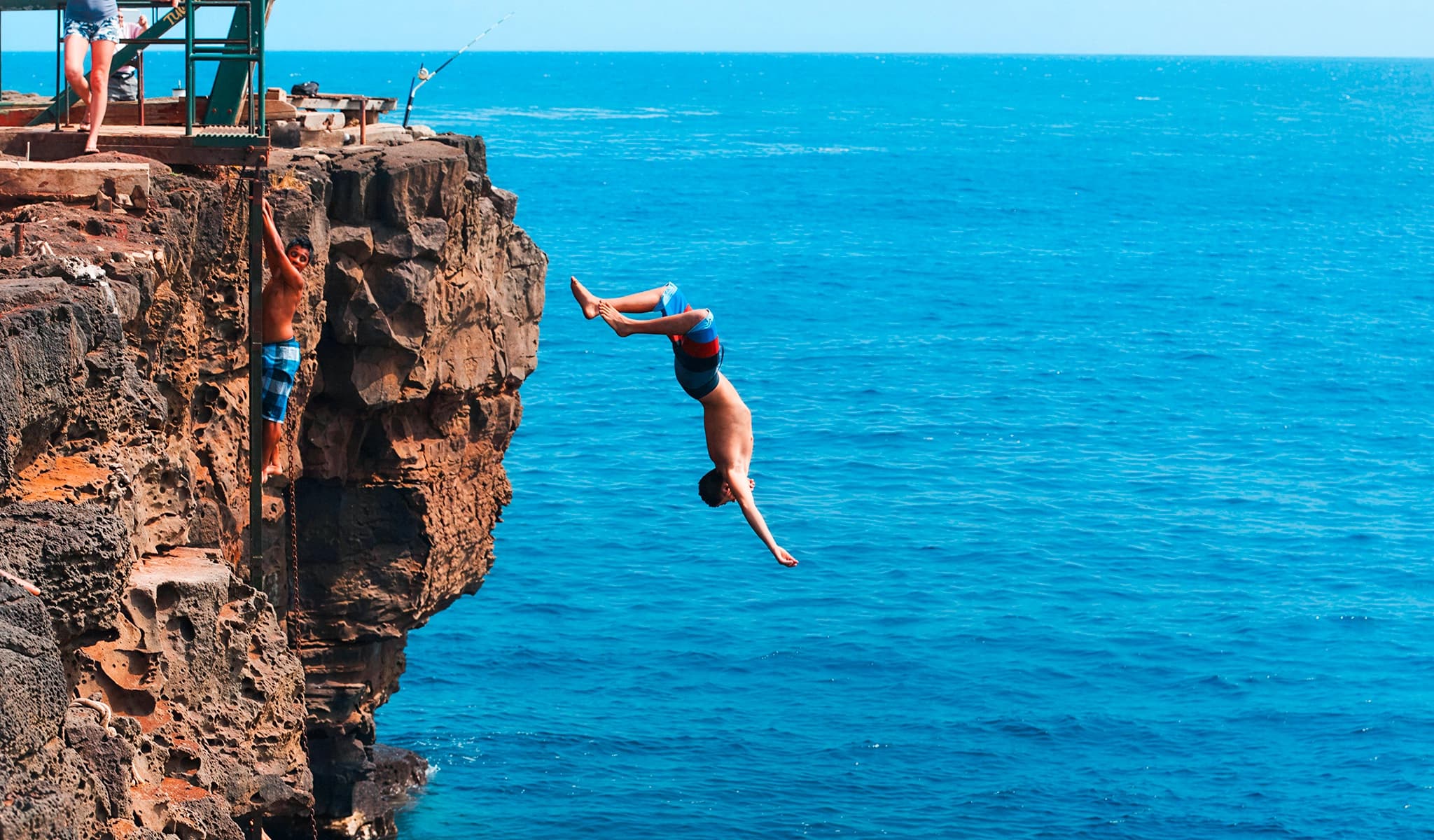
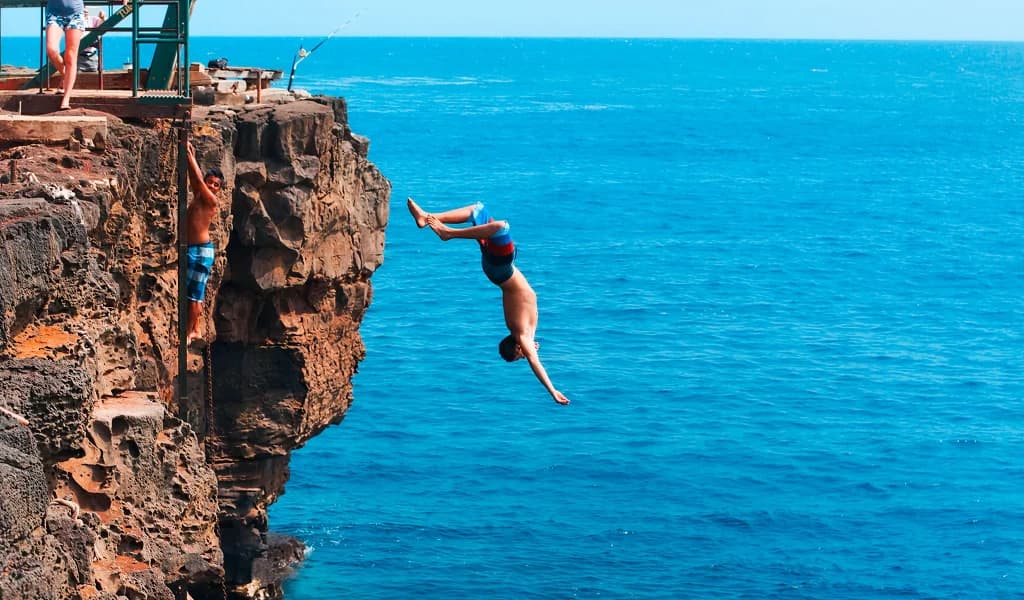
Leaping off a cliff into open air above crashing waves takes guts. As demanding as high diving is, cliff jumping requires a different sort of discipline. You’d need it to launch yourself into the unknown and keep coming back for more.
Beyond hurling yourself off a rocky ledge, cliff jumping is a unique sport that demands a level of physical conditioning and mental preparation that catches most of the uninitiated off guard.
Cliff Jumping 101
At its core, cliff jumping is exactly what the name suggests: you jump from a rock face into a body of water.
But that simple definition is deceptive. There’s a lot of thought, preparation, and planning that goes into cliff jumping, much of it long before the launch. The focus is on risk management and reduction, eliminating the possibility for things to go wrong wherever possible.
Launching yourself into the water from a clifftop demands a degree of physical preparation. No one’s belly flopping into the water at these heights, which means fine-tuning the ability to maneuver mid-air to ensure a safe landing.
For example, dødsing, or death diving, is a Norwegian-born style of cliff jumping where the diver hits the water in the pike position, hands and feet or knees first, to avoid painful impact. Tombstoning, a UK variant, has jumpers land feet-first in the water, staying upright (like a tombstone) the whole time.
And because most cliff jumps begin with a running start, jumpers have a lot more forwards momentum than traditional divers. They need it to make it out far enough to safe waters. That momentum can be used for flips, spins, and other twists, adding style and flair to each jump
This all requires a deep understanding of the risks involved in jumping, a strong command of one’s body, and the courage to put it all together in one epic moment.

Invisible Preparation
The difference between a cliff jumper and a random leap is, first, in preparation, which happens before anyone leaps off of anything.
Site Scouting
Serious jumpers have to get a good look at the landing zone before they commit to a dive. They might swim out to the spot and dive down to check depth and look for rocks or other submerged dangers. If they’re working from an established location, this can be more of a formality (if needed at all). It’s still a good practice, however, because water that looks deep from above can be dangerously shallow in reality. Water clarity can be deceptive.

Depth
Around 10 to 15 feet of water is needed for a safe jump. 8 to 9 feet is the absolute minimum for a jump of any serious height. The vast majority of spinal injuries happen in water that is shallower than 6 feet, so jumpers must avoid leaping without looking.
Entry Technique
Feet-first entry is the preferred method for entering the water on a high cliff jump, especially if you don’t have formal training. This protects the head and neck and reduces the chance of a face-first hit on a surprise obstacle.
Good technique means keeping a straight, streamlined body, with arms tucked in rather than flailing, and pointed toes to help the body punch through the water.
Belly flopping from great heights is absolutely disastrous and can cause serious injury. At greater heights, technique becomes mandatory, because dropping from 30 ft or more results in an impact at about 30 mph.
Progression
Experienced jumpers will build up to serious jumps gradually. Comfort and body awareness come from a series of successful jumps. Once a jumper has gotten some good reps, they can attempt higher heights. Skipping a natural progression is one of the most common ways that newer jumpers will get hurt. Experience is protective.
The Mental Discipline Behind the Leap
Like so many adventure sports, cliff jumping requires a certain mindset. It’s not just about bravery – which is obviously a key component – but having a proper way to take risk safely. Even with good planning, there are times when backing out is the right move. You don’t jump just because a friend did. You don’t jump when conditions change and have made the fall sketchy. If you’re at the ocean, tides can shift sand and expose rocks, water levels can drop, and currents can strengthen without warning. An experienced jumper knows that there’s always tomorrow. You can’t let the effect of alcohol, adrenaline, or a cheering crowd override judgment.
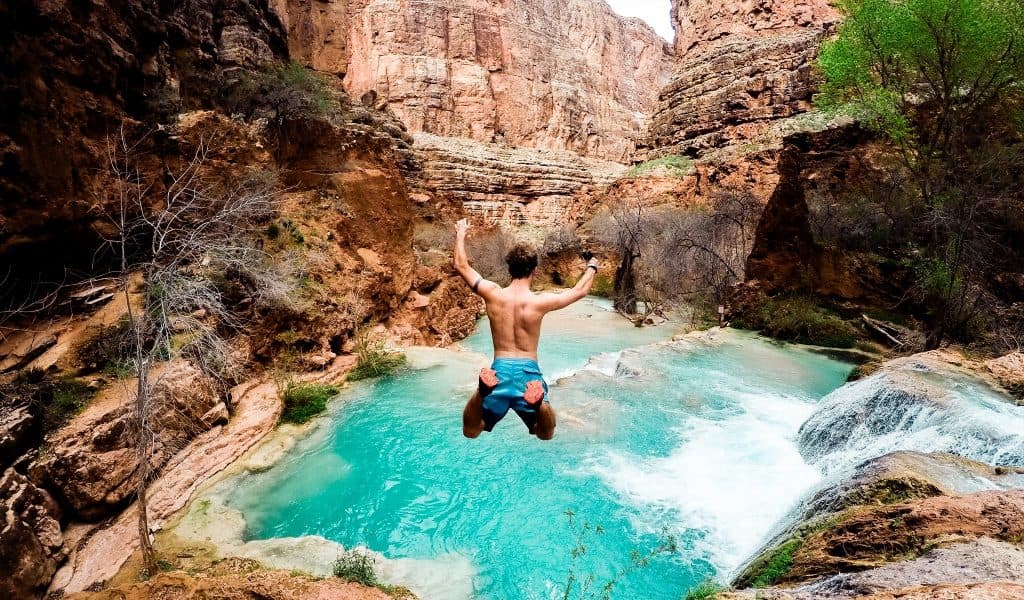
That’s what separates the mind of a tombstoner from a serious cliff jumper. Injuries are commonly linked to drinking, peer pressure, and unscouted spots. Being fearless is great – but unfortunately, there’s lots of people in the graveyard and hospital who were fearless.
The best result comes from mixing courage and caution in their proper measures. It’s the recipe behind all the best cliff jumpers who jump for years and years. Before you can be that Viking guy who death dives with axes into water (Ken Stornes), you need to be the guy who studies a new jump before he sends it.
The Risk Is Real
Cliff jumping is exhilarating, but dangerous. To mitigate the risk, jumpers like world record holder Laso Schaller plan well in advance before they take the plunge.
The UK Coastguard’s repeated public warnings after incidents at sites like Durdle Door make the point very clear: even people who think they’re jumping safely are still gambling with factors outside their control. You never really know 100% what awaits beneath the surface.
Cliff jumping rewards patience, preparation, and the discipline to say no, and it punishes impulsiveness. It’s the same mental framework that governs any risky pursuit where a single misstep carries permanent consequences. Participants should respect the activity enough to prepare for it properly, or not do it at all.
The people who stay in cliff jumping for years aren’t the ones blindly chasing adrenaline. They’re the ones who’ve learned to treat every single leap with the same level head as the first one.