
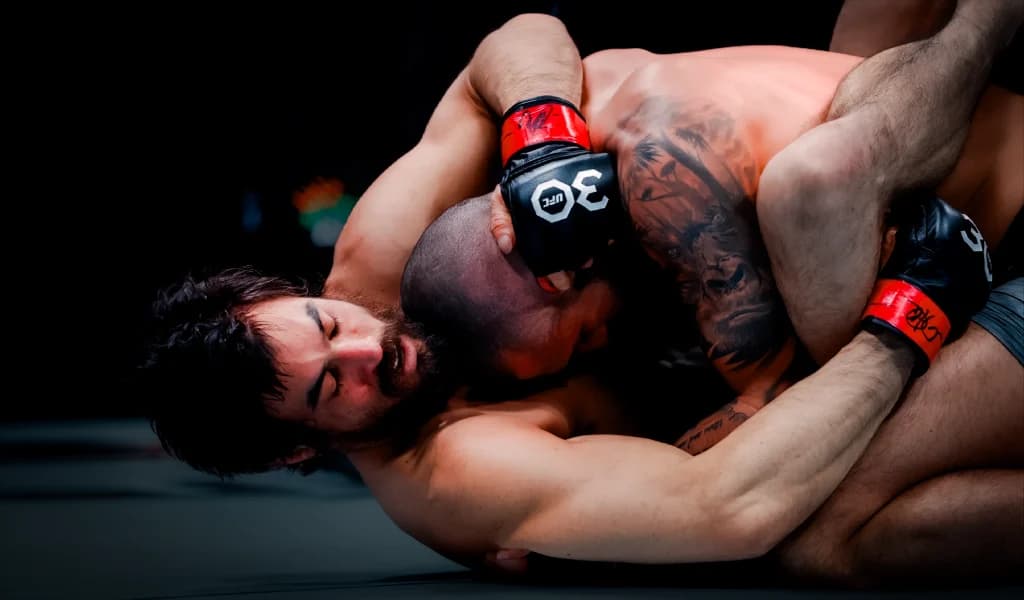
As Selema Masekela trained alongside Kron Gracie, the conversation quickly moved beyond technique and into the weight of carrying one of the most legendary names in combat sports. Kron reflected on growing up as the son of Rickson Gracie inside the family that created Brazilian jiu-jitsu, the internal tensions that fractured parts of the Gracie dynasty, and how years spent alongside Nick Diaz and Nate Diaz helped him develop an identity outside of his lineage. By the end, the discussion turned toward the mental side of fighting — and the mindset shift that separates athletes who compete from fighters prepared to go to war.
Winning the “Boring” Way: Grappling in MMA
In an MMA match, especially in the UFC, highlight-reel knockouts are the most exciting thing that can happen. Fans absolutely go crazy when someone gets slept in a creative way. But those who have tried fighting know that facing an elite grappler is a different kind of nightmare. The sniper striker may put you out at a moment’s notice, but the grappler will drag you down into deep waters, batter you, exhaust you, and ultimately decides to do whatever they want with you.
It’s brutal, but it often lacks the electricity of a stunning knockout. Instead, it’s a slow, suffocating conversation in which only one person is doing any talking. Those who’ve been on the mats with a Brazilian Jiu-Jitsu black belt can attest to the hopelessness of it.
If you know, you know.
Modern MMA thus offers multiple paths to victory. While promotions sell knockouts and algorithms reward viral clips, great grapplers get wins. Sometimes, there’s just nothing that can be done about it. The boos may rain down from angry fans while a skilled wrestler maintains a steady top position through steady pressure. At the end of the match, that wrestler will still get their hand raised.
These fighters demonstrate what grapplers know: that patience, positioning, and the quiet accumulation of small advantages can win you a fight. It isn’t all about getting a sub. Instead, you can wear down your opponent, make them gas out as they struggle to escape your grip.
It’s the thinking man’s way to rumble.
Where Did Brazilian Jiu-Jitsu (BJJ) Come From?
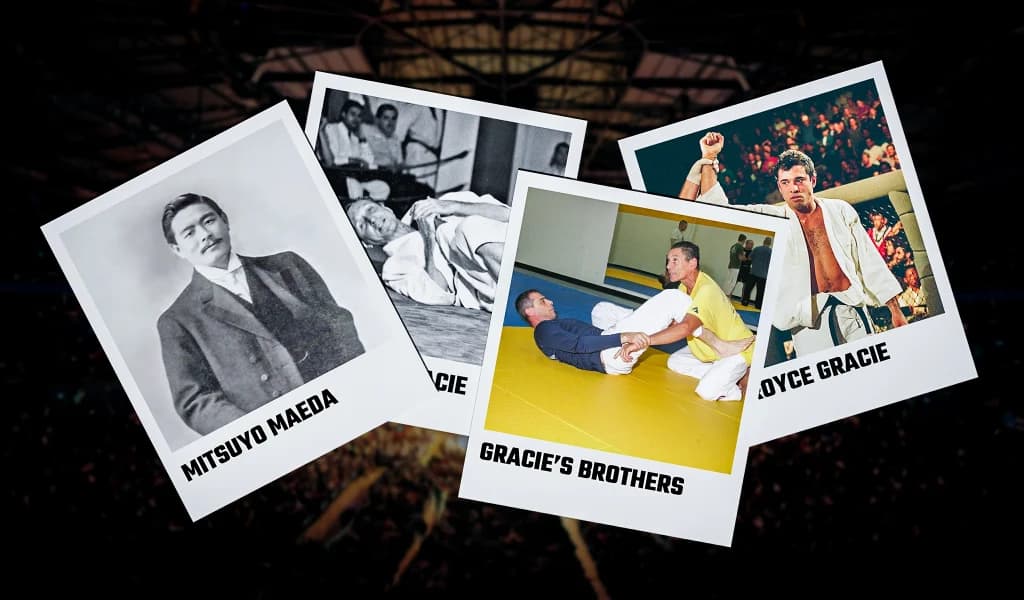
Mitsuyo Maeda, a Japanese Kodokan Judo expert, came to Brazil in 1914. There, he met Carlos Gracie and helped him learn the foundations of Judo and Japanese Ju-jitsu (the “gentle technique”). Carlos’s brother Hélio was not as sturdy as others, and so he modified the moves to rely less on strength and more on leverage. They focused not as much on standing throws favored in Japanese Judo and locked in on ground fighting (ne-waza).
The Gracie brothers evolved the art into a distinct style focused on submission grappling, which ultimately became known as Brazilian Jiu-Jitsu. They then spread their martial art through challenge matches. BJJ had a huge global coming-out party when Royce Gracie used it to win UFC 1. Its status as a premier martial art was certified. Today, practitioners all over the world meet up to “roll” and learn BJJ together. It is a crucial part of the set of skills that any modern MMA fighter must have to face high-level opponents.
How the Ground Game Works
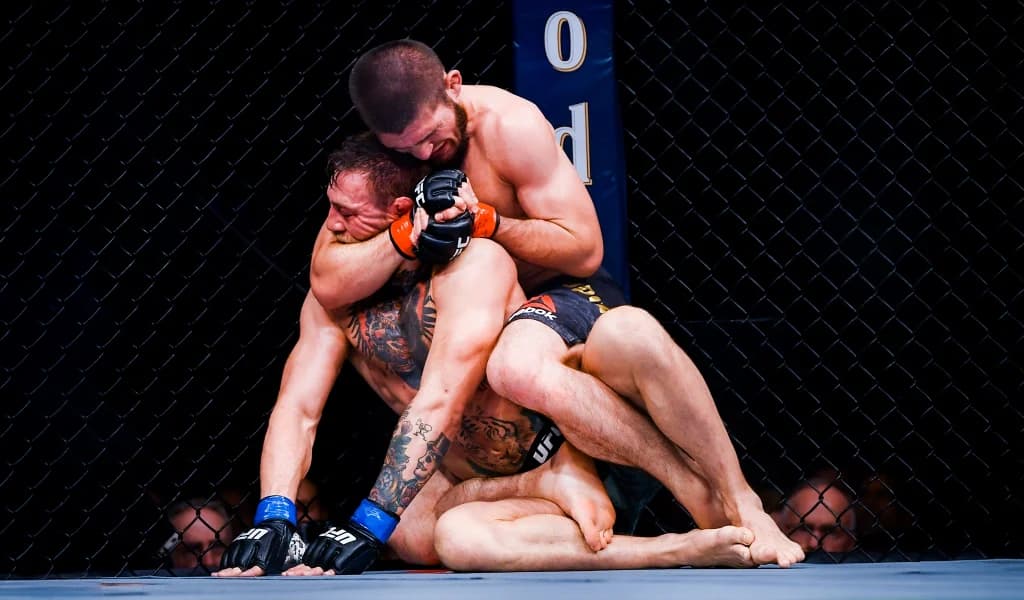
BJJ is looked at by many as a submission hunt. One person tries to get a hold of another and either slap on a joint lock (like Ronda Rousey’s famous arm bar) or sink in a choke (like the high-percentage rear naked choke used by Nate Diaz to finish Conor McGregor). But this view misses the rest of the iceberg lurking underneath the water.
BJJ is a control system.
From the very first grips and takedown, you are trying to get control and get into a favorable position (usually on top, but BJJ fighters are quite capable from the bottom as well). From there, you continue working to advance your position. You might move from lying on someone from the side to mounting them on the chest, making it quite hard for them to move and taking their strong legs out of the equation. From there, you can “ground and pound” them, raining down punches and elbows. Or you can seek a submission, like a triangle or Ezekiel choke. The possibilities are quite varied, and the person with the advantage is the one with the initiative, dictating the match.
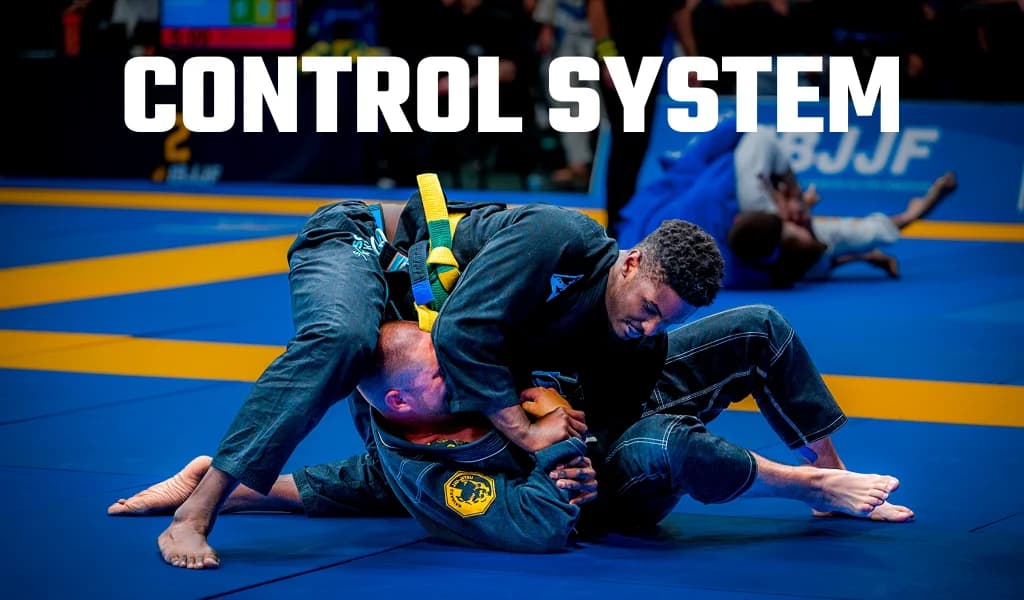
If you’ve never experienced being on the wrong end of a BJJ roll, it can be hard to imagine. Just think of an older sibling who plays football, pinning you down and holding you there while you struggle and gradually become exhausted. It’s a little like that, but being at the mercy of a skilled BJJ practitioner creates a special kind of hopelessness. There is literally nothing you can do to escape. Their control is just that strong. This is the power of leverage and technique properly applied. If you doubt it, take yourself down to your local BJJ gym and sign up for a trial membership. It will be confirmed quickly thereafter.
Elite grapplers in MMA don’t just hunt submissions. They first hunt positions. One of the core concepts of BJJ is “position before submission,” meaning that you want solid control before you start working a particular submission. The control is far more valuable as a first step.
This reframe matters because it changes how you as a fan can read fights. A round where Fighter A shoots a double leg, secures top position, and then grinds through three minutes of brutal pressure is a round he has won (especially if he lands forty unanswered ground strikes). The scorecard for the round will then reflect the advantage won by grappling.
Khabib Nurmagomedov and Inevitability
Arguably no other fighter in MMA history has illustrated this philosophy more clearly than Khabib Nurmagomedov. His record of 29-0 is remarkable, but the way he won is what is most frightening. He took control of opponents and abused them in every way possible. By the time a submission opportunity appeared, the fight had typically been over for minutes. The formal sub just made it official. The opponent might not ever admit it, but ending that fight was surely a relief.
What made Khabib’s grappling so distinctive was not athleticism alone, though his physical strength was fearsome. It was his “decision tree,” as nerdy as that sounds. His positional hierarchy was etched in his brain and muscles. He worked through it with mechanical patience, and there was so little room for anyone to escape. Once he secured a takedown, it was pretty much over. He made being on the bottom absolutely miserable. He would create so much pressure, bring so many threats, and use so many shifting angles of attack that his opponent’s mental and physical energy was fully drained just trying to process them, let alone fend him off.
The Energy Attrition Battle
What this highlights is the “body math” behind grappling. It’s really a war of energy attrition. If Fighter A is easily making Fighter B work really hard, B is losing. If he keeps it up for a few minutes, B will start to gas out. B will feel tired. And then A will start taking over. The energy exchange is what makes grappling so powerful.
Georges St-Pierre, widely regarded as one of the greatest MMA fighters of all time, built his dominance on this simple principle. Many hated his fights for what his critics called his ‘lay and pray’ style, but the man stayed in control. He won his fights and there was nothing opponents could do about it. Some fans may not have liked it, but it was undoubtedly what peak performance looked like.
Demian Maia did a similar thing while focusing on pure BJJ. He had no illusions about his striking. His game was entirely about getting close, clinching, taking his opponent to the ground, and then working a patient, grinding game until he could sink in a rear naked choke. All he needed was control.
Subtle Advantages: The Language of Grips, Frames, and Weight Distribution
Control-first grappling is built on increments so small that casual fans won’t have a clue that one fighter is advancing. A grip on a wrist, a slight elevation of a hip, the angle of an elbow as it frames against a neck… these things matter greatly in high-level ground fighting, and they accumulate into the reality of who is winning a grappling match or fight.
Wrestlers who transition successfully into MMA, like former UFC Champion Henry Cejudo, bring a sophisticated understanding of these subtleties from their collegiate or Olympic backgrounds. Cejudo in particular demonstrated how wrestling’s obsession with body position translated directly into MMA success. He used Olympic-level takedown mechanics to put him in great positions to stay heavy, stay connected, and keep opponents from resetting or gaining back what they had lost.
On the submission grappling side, Charles Oliveira represents a different but equally instructive case. His submission finishing rate is genuinely historic, but what makes those submissions possible is his positional intelligence. He is so fluid as he moves through the “guard,” which is an opponent’s ability to use their legs and hips to keep an opponent away or controlled. He can then take the back and establish solid control before hunting the final choke. The finish is visible, but the things that led to the positioning that built the finish are not.
Good grappling means patience, efficiency, and the quiet removal of your opponent’s options. That’s what mastery looks like. The tap is really just the receipt at the end of the transaction.