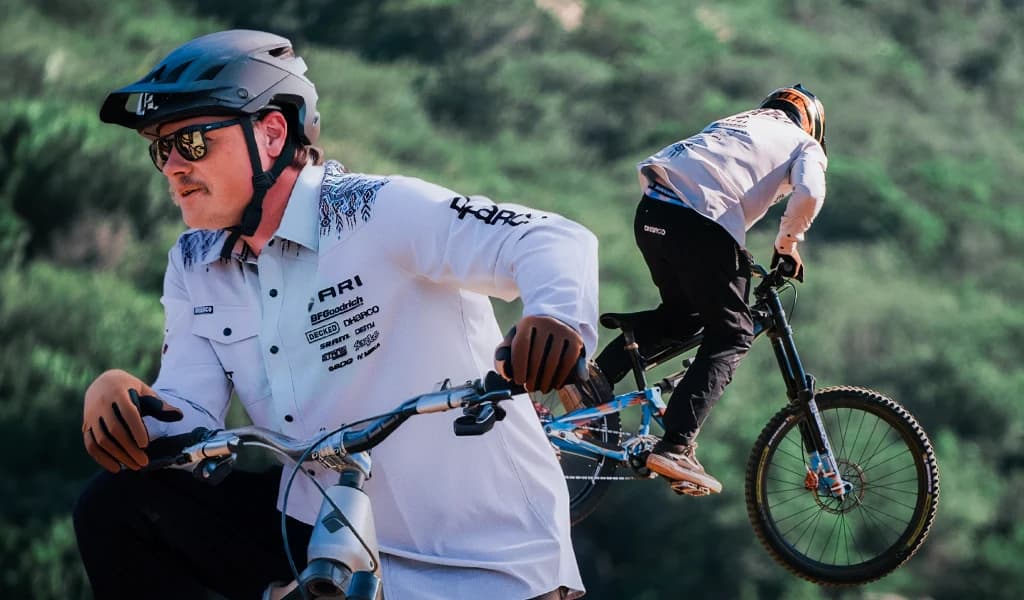
It’s not easy to stay in the freeride mountain biking game for years. The sport is just too punishing. Athletes have to launch off of cliff faces, drop dozens of feet and land hard, and deal with terrain that would be extreme even for a hiker on foot. Bikers often have careers cut short by injury and burnout. Their bodies can only take so much damage, after all, and this is not a particularly forgiving sport.
That’s why the career of Kyle Strait is extraordinary. He’s been at the top of this incredibly demanding sport for more than two decades.
Early Life and How He Got Captivated by Biking
Kyle Strait was born on April 4, 1987, in Redlands, California. He grew up in Alpine, California, which is a small community in the hills east of San Diego. He learned to ride a bike early on. His dad took off his training wheels around age three. By the time he was eight years old, he was already riding competitively at local level. In between races, he would hit jumps at dirt parks. “Out of boredom,” he says, he did “anything [he] could do on a bicycle.”
By 13, he was already a rising professional. At the 2001 Sea Otter Classic in Monterey, California, Strait entered the pro dirt-jumping competition and won. He beat established professional riders (like Cedric Gracia) in the process, and immediately gained the momentum to take things to the next level. John Ker, a photographer for Mountain Bike Action magazine was so impressed that he asked Strait’s father if Strait wanted to be a test rider for the publication. He accepted, and a teen biking sensation was born.
Red Bull Rampage: A Career-Defining Event
If there is a single competition that has come to define Kyle Strait’s legacy, it is the Red Bull Rampage. Rampage is a freeride event held in the desert canyon terrain of Virgin, Utah. This area offers some of the most extreme mountain bike terrain anywhere in the world. Riders have to execute technical tricks and lines at genuinely scary speeds and heights, all while being judged on style, difficulty, and execution.
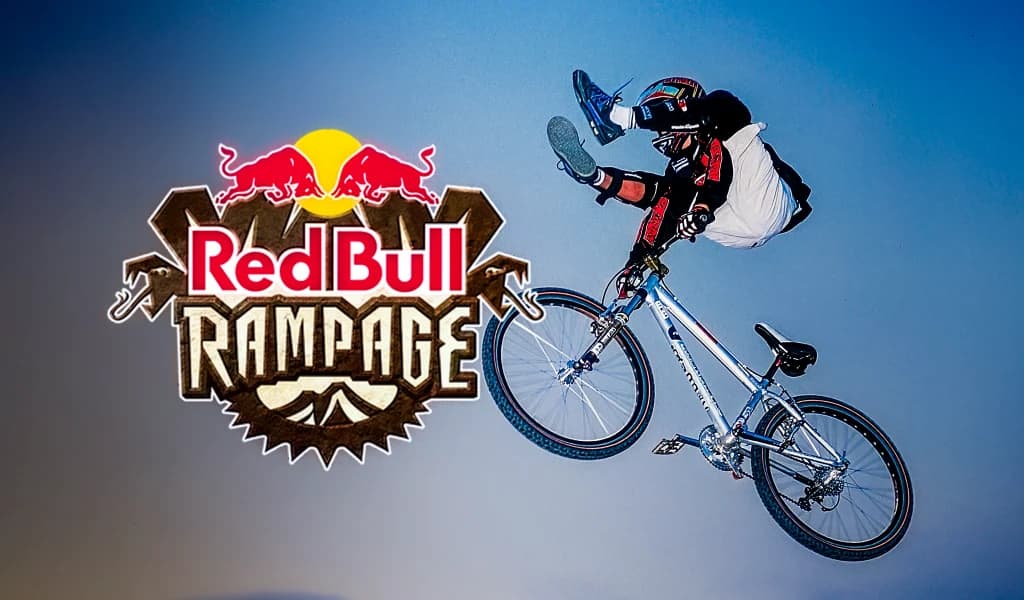
Strait was there from the start. When the inaugural Red Bull Rampage was held in 2001, Strait was just 14. He finished ninth that year, but bigger things would soon follow. Three years later, in 2004, he won Rampage at the age of 17. Amazingly, he did it despite a gnarly tendon injury that caused him to ride with a splinted finger. He threw a massive no-hander, earned the top score, and became the youngest winner in event history.
That same year, he placed third in slopestyle at Crankworx in Whistler, British Columbia. He also earned a bronze medal in the junior men’s downhill at the UCI Mountain Bike and Trials World Championships.
Consistency Across a Decade of Rampaging
What followed over the next decade was consistent, high-level performance at every single Red Bull Rampage. Strait was inevitable. Through every iteration of the competition, he continued to show up, compete, and perform at an elite level.
In 2013, he reached yet another first. Riding with what commentators described as unmatched composure and confidence, he executed a mind-blowing run. It had fluid upper-mountain riding and featured an insane suicide no-hander off the Oakley Icon Sender. Strait dropped more than 70 feet and landed clean. His score of 87.50 placed him first (ahead of Kelly McGarry and Cameron Zink), and he became the first two-time winner in Rampage history.
A Versatile Competitor
Strait isn’t just a Rampager, he’s an “all-rounder” who shows up whether the competition is in dirt jumping, dual slalom, slopestyle, or downhill racing.
In 2006, he again placed third in slopestyle at Crankworx. In 2012, he won the Sea Otter Classic Pro Men’s Dual Slalom alongside Jill Kintner. This is the mountain biking equivalent to a world championship in that discipline. He also made the podium at the US Mountain Bike Nationals in multiple disciplines. Even among top professionals, Strait’s skill versatility is a standout.
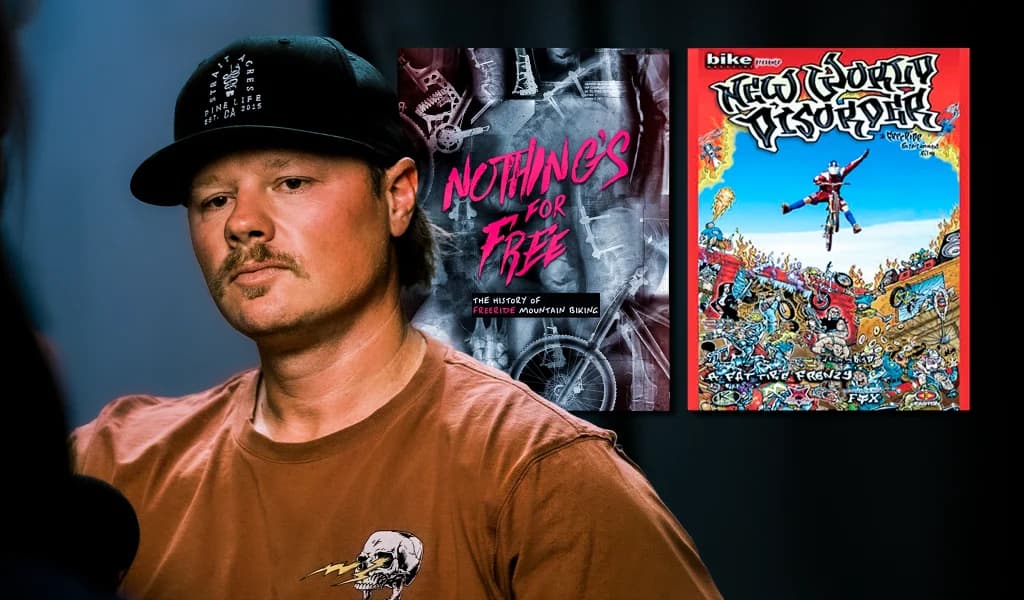
Strait has appeared in landmark freeride films, including New World Disorder and Nothing’s for Free, as well as the Vitus-produced documentary short I’m Fine, which dealt with his recovery from a serious injury. That injury came during the 2022 Rampage practice sessions, and it was the third time Strait had broken his back.
Injuries, Resilience, and the Cost of the Sport
The lead-up to the crash
Strait doesn’t frame the accident as bad luck. Instead, he describes it as a sequence of small compromises that compounded. He and his dig partner, Cam Zink, were rushed during preparations. The jump hadn’t been finished in time, and so the landing wasn’t really fully shaped. The clock ran out before either of them felt truly ready. He recalls the logic as something like, “Now we have to do it, or we don’t have a line.” That pressure is part of Rampage’s particular cruelty. The competition day is the final act after weeks of buildup. Sometimes a rider doesn’t experience the full line until it’s go time. When Strait finally dropped, he sensed immediately that the gap was further than he’d thought it would be. He started higher than expected, took a pedal, went to pop off the takeoff, and then sank into the fresh dirt instead of popping upward.
This led to a brutal crash.
A “systems check”
What followed on the ground was what Strait calls a “systems check.” With eyes closed, he ran through his body parts mentally, analyzing the damage. From previous experience, he says, he knew exactly what “gone” felt like when it came to his back.
Rachel, his wife, was one of the first to reach him. “Just cart me out of here,” he told her. “It’s broken.” Strait was life-flighted by helicopter to a hospital, where surgeons found he had fractured three vertebrae. This included his T6, which required emergency surgery to stabilize. He was unable to compete in that year’s finals, ending a streak of Rampage final appearances that had stretched back to 2001.
The road to recovery
The crash was frightening to witness, but Strait, as always, was undeterred. He explains that, “The brain is the most important part, whether you’re learning to jump or coming back from an injury.”
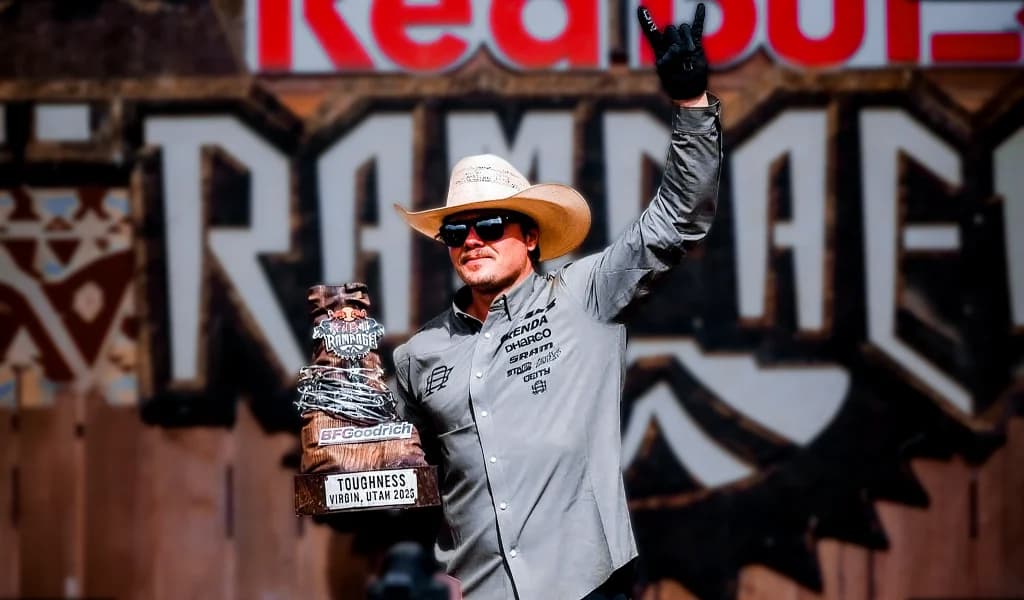
He did his rehab and by October 2023, he was back at Red Bull Rampage. He finished sixth and earned the BFGoodrich Tires Toughness Award. Truly, though, it didn’t matter where he placed. He stomped the specific drop that had broken him and was ecstatic. “That’s the biggest celebration ever,” he said.
Building a Legacy Off the Bike
Strait is as much a builder and organizer of mountain biking as he is a competitor. At his property and mountain bike compound in Alpine, California, he has plenty of trails, jump lines, and dual slalom courses. He has also co-hosted Strait Acres Invitational from Big Bear Lake since 2022.
His involvement in course design has extended to major competitions, including the GoPro Mountain Games dual slalom in Vail, Colorado, and the Sea Otter Classic dual slalom course, which he designed from scratch. It is a transition many legendary riders eventually make, and Strait has embraced it without even stepping back from competition.
Strait’s wife, Rachel (whom he married in 2015), is herself an accomplished racer. The couple has a daughter, Stevie, named after the late professional mountain biker Stevie Smith. Outside Online noted that Kyle and Rachel help ignite each other’s competitive drive.
After all these years, Strait is still a driven competitor. It’s obvious that it takes more than injury to keep him off the bike. And so one thing is clear: if Strait ever decides to end his legendary run, it seems that it will be on his own terms, or not at all.
Join Kyle on the Team Ignition Show
For years, Selema Masekela has watched mountain biker Kyle Strait defy gravity from the commentary booth. In this episode of the Team Ignition Show, Selema swaps the headset for a helmet and heads to Straight Acres, Kyle’s sprawling private 11-acre freeride compound in San Diego, to experience it up close.
Between sessions on the jumps, Kyle shares the story of the Rampage crash that broke his back and almost ended his career, and the mindset that brought him back stronger. Kyle also puts Selema to work, teaching him the fundamentals of jumping before unleashing him on a freshly built track, riding side by side.